Kelley's Sewage Cleanup
Basehor, KS · 66007 Basements · Bathrooms · Crawl Spaces · Businesses

Raw Sewage Cleanup in Basehor, KS Near Me

Untreated sewage with solids on floors or in the yard. A local crew in full protective gear removes and disinfects it.

Sewage Backup Cleanup
Local Cleanup Crews
Category 3 Procedures
Homes and Businesses

Raw sewage is untreated wastewater with the solids still in it, straight from the drain line or a septic tank. It is the worst version of a backup to deal with, and it is not something to clean with a mop and a bucket of bleach. For raw sewage cleanup in Basehor, KS, we connect you with a local crew that works in protective gear and follows contamination procedures.

Where raw sewage shows up

Most calls involve one of a few situations. A main line blockage pushes sewage up through a basement drain or lower toilet. A septic tank overfills and backs into the house or surfaces in the yard over the drain field. A broken pipe in a crawl space leaks sewage onto the soil underneath the home. Each needs a slightly different approach, and the crawl space version is covered under crawl space sewage cleanup.

Protective gear is not optional

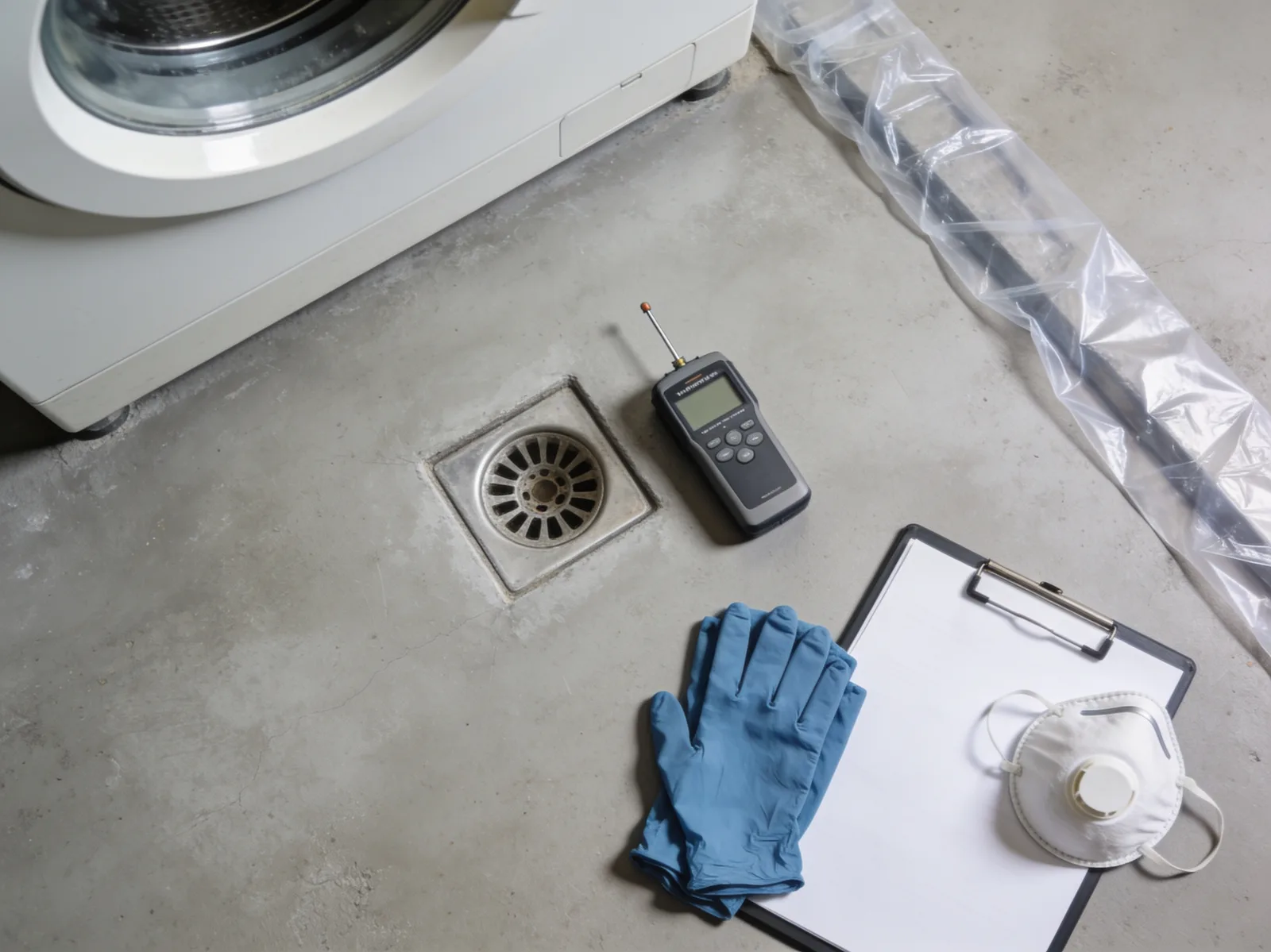
Crews treat raw sewage as hazardous to handle. Expect them to wear:

  • Nitrile or rubber gloves, often doubled
  • Waterproof boots or boot covers
  • Eye protection
  • A respirator, especially in enclosed spaces
  • Disposable coveralls on bigger jobs

If you have to go near it before the crew arrives, wear gloves and boots, wash thoroughly after, and keep children and pets out entirely. Don't eat or drink in the area.

How crews clean it

Solids come out first, by shovel or extraction, and go into sealed bags. Liquid is pumped out. Porous materials that touched the sewage are removed, since they can't be reliably disinfected. Hard surfaces are scrubbed with a detergent first, because disinfectant works poorly on surfaces that still have organic matter on them, and then treated with an EPA-registered disinfectant and left for the contact time on the label. Read about that step under sewage sanitization. Drying follows.

Outdoor raw sewage

Sewage surfacing in a yard usually means a septic or lateral problem. Cleanup of the surface may involve removing contaminated soil or mulch and applying lime or a disinfectant where appropriate. The underlying system is a job for a septic contractor or plumber; see septic backup cleanup for how the two jobs fit together.

Cost factors

The price depends on the volume, the area affected, whether finished rooms were involved, access, and disposal of bagged materials. Jobs where sewage sat for days before anyone found it, such as in a vacant rental or a vacation home, usually need more tear-out and longer drying than one caught within hours. Ask the crew to walk through the scope before work starts so you know which rooms and materials are included.

Call (217) 404-1483 and we will connect you with a crew for raw sewage cleanup in Basehor, KS.
How cleanup works

Four steps to a clean, dry space in Basehor, KS

01

Stop the water

Shut off every fixture, keep kids and pets out, and take photos from a dry spot. Then call and tell us where the sewage is.

02

Get matched with a crew

We connect you with a local sewage cleanup crew covering Basehor, KS and you go over the scope, timing and price with them.

03

Extract and remove

The crew pumps out the sewage, bags solids and cuts out carpet, pad and drywall that soaked it up.

04

Disinfect and dry

Hard surfaces get cleaned and disinfected, then air movers and dehumidifiers run until moisture readings show dry.

Coverage

Sewage Cleanup Across Basehor, KS

Sewage backup cleanup across the neighborhoods and ZIP codes around Basehor, KS.

ZIP codes we serve

66007
Raw Sewage Cleanup in Basehor, KS

Sewage cleanup FAQs

Frequently asked questions about sewage cleanup

Questions we hear most about Raw Sewage Cleanup in Basehor, KS.

Talk to a real person
Can I clean up a sewage backup myself?
<p>A small spill on tile from a clogged toilet, caught right away, is something many people handle with gloves, detergent and a disinfectant. Anything bigger is a different story. Sewage that soaked into carpet, drywall or subfloor has to be removed, not just wiped, and the structure needs drying with meters to confirm it. Household bleach on a dirty floor doesn't do the job. If it spread past one room or reached finished materials, a crew that does <a href="/services/sewage-backup-cleanup">sewage backup cleanup</a> is the safer route.</p>
How long does sewage cleanup take?
<p>Extraction and tear-out usually happen in the first day or so. Drying is the longer part. Most structures need three to five days with air movers and dehumidifiers running, sometimes more in a humid basement or with thick materials like hardwood subfloor. The crew should take moisture readings each visit and leave the equipment until materials reach dry targets. Rebuilding comes after that and depends on the contractor. A small toilet overflow on tile can be done much faster than a finished basement.</p>
How do I get rid of a sewer smell after a backup has been cleaned?
<p>A lingering smell usually means something is still wet or contaminated: carpet pad left in place, drywall that wicked higher than anyone checked, or damp framing. Moisture readings help find it. A dried-out floor drain trap can also let sewer gas in, and pouring water down the drain often fixes that. Deodorizing only works after the source is gone. Our page on <a href="/services/sewage-odor-removal">sewage odor removal</a> explains how crews track the smell down.</p>
Does drywall have to be removed after a sewage backup?
<p>Drywall that absorbed sewage is usually removed. Gypsum and its paper facing soak up water and wick it upward, and contaminated drywall can't be reliably disinfected. Crews measure the wet line with a moisture meter and make a flood cut a foot or more above it. Insulation inside the wall comes out too. The studs usually stay, and get cleaned, disinfected and dried before new drywall goes up. Details are on our page for <a href="/services/sewage-damaged-drywall-removal">sewage damaged drywall removal</a>.</p>
Can I use bleach to disinfect after a sewage spill?
<p>Bleach has limits here. It breaks down when it hits organic matter, so it works poorly on a floor that hasn't been cleaned first. It does nothing for porous materials like carpet pad or drywall, which need to come out. And mixing it with ammonia-based cleaners releases dangerous fumes. Crews clean surfaces with detergent first, then apply an EPA-registered disinfectant and leave it for the contact time on the label. If you are tempted to bleach it and move on, call (217) 404-1483 first.</p>

Book sewage cleanup

Sewage Backup in Basehor, KS? Call now.

Tell us where the sewage is and we connect you with a cleanup crew covering Basehor, KS. Scope, timing and price are gone over on the call. (217) 404-1483.

Call (217) 404-1483 Services